
THE MIRACLE OF MAGLAVIT: AN ENCOUNTER WITH GOD
Maglavit is not just a plain village, lost between the Danube and the vast sky. It is a place where, for a few weeks in 1935, reality seemed to thin, as if the earth had allowed a glimpse of something older than the world itself. A nearly mute shepherd claimed he had met an Elder — a white, ageless being, whose gaze could turn people from their path. That was all it took. The plains filled with people, and the Danube seemed to hold its breath. People spoke of lights, of moments when the air seemed to stiffen, of a strange wind passing over the furrows like an invisible finger.

Some came seeking healing, others to confront their fears. Some came out of a need to believe in something. Yet all felt the same heavy vibration, a kind of echo that could not be spoken aloud without words twisting, as if language itself were unprepared for such things. Then, as abruptly as it had begun, the miracle faded. Petrache Lupu remained a simple man, the plain resumed its silence, and history hurried on. Yet the name remained: Maglavit. A place where one cannot be certain whether something truly happened, or whether, for a brief moment, Romanians only heard the whisper of their own deeply buried hopes.

Petrache (Petre) Lupu
Petrache Lupu was born on October 12, 1907, in Maglavit, a village in the Dolj plains where silence seems to have its own pulse. He lived and died in the same place, on December 14, 1994, as if fate would not allow him to part from the land from which his revelations sprang. Orphaned of his father early on, Lupu carried the mark of fragility from childhood. A severe illness — “the pox” — struck him young, leaving him deaf and lisping, as if the world had decided to cut off his usual channels to sound and speech. In 1931, the army declared him “unfit,” diagnosing him with suppurative otitis, perforated eardrums, and “mild idiocy.” But perhaps it was precisely this forced retreat from human tumult that opened his senses to something else — to the vibrations of a world that does not reveal itself to the noisy. From the age of twelve, he worked as a shepherd for wealthy villagers. He lived among sheep, wind, and grass, with a limited vocabulary and virtually no literacy. Instead of letters, he learned to read the movement of clouds; instead of books, he deciphered the signs of the plains. A simple life, yet lived at a rhythm that sometimes touched the edges of the sacred.

The Shepherd and the King
In 1932, Petrache Lupu married Elisabeta Badea, a quiet, grounded presence who brought him a rare earthly calm, unusual for a man accustomed to living among sheep rather than among people. They had two children, Alexandru and Mihai.

And yet, history has a way of surprising reason itself. In September 1935, Carol II, the king of a troubled country, baptized Lupu’s youngest son. He did not come personally but sent General Sichitiu as his representative to Maglavit. An illiterate, deaf, lisping shepherd, declared “unfit” by a military commission, suddenly found himself — by a twist of fate or an inexplicable mystery — under the symbolic blessing of the Romanian throne. For a brief moment, an invisible bridge seemed to rise between the edge of the world — the lost village in the plains — and the very center of power. And this bridge was not built with wealth, words, or influence, but with something no one could define: what Petrache Lupu had seen “At Buturugi” and why that place continued to pulse, like a hidden heart, in the depths of the Romanian fabric.

“At Buturugi,” the place where the Elder descended
He was a shepherd accustomed to the wind, to animals, and to solitude. A man for whom the plain was both roof and home; both path and refuge. Nothing in his manner suggested that one day he would become the center of an unprecedented spiritual upheaval. Yet in 1935, at that isolated place the locals called “At Buturugi,” Petrache claimed to have had multiple divine visions. There, where scorched grass mingled with stumps of long-felled trees, reality seemed to thin before him almost to transparency. Others saw only the plain. He saw something else. It was neither lightning, nor a trick of light, nor a lapse of the mind. It was a Presence. Lupu, in his simple way, called it “the Elder.” But from the few words he could string together emerged a face beyond ordinary comprehension: a luminous silhouette, an ageless old man, with a peace too intense to meet directly. A being who did not walk, but floated a few centimeters above the ground — leaving no footprints but filling the air with a unique weight, both a summons and a judgment. What did a deaf, lisping shepherd see there? A hallucination? A tear in the fabric of the world? Or perhaps a form of truth only those on the margins of society can touch? Maglavit still does not know. And maybe it is precisely this unknown that keeps it alive.

What might God have said?
Petre said the Elder appeared to him three times. A presence that did not speak like a human — no open mouth, no sounds, no dialogue. The message did not come through the air but as an inner pressure, like a voice passing directly through blood and bone. The first time, the shepherd stood frozen, unsure if he saw a being or a vapor. The second time, the Elder made a brief sign — not calling, but stopping him, like someone at the gate of a sacred place. The third time, the vibration was so strong that Petre described it as a wordless verdict: “Stop evil, return the world to prayer.” From the few words he could gather, the message condensed into short, weighty commands, almost carved in stone. The first message: Stop wickedness! A stern admonition, as if the Elder pronounced judgment on humanity. The second message: Return to faith! Not as dogma, not as obligation, but as a call to fasting, prayer, and moral purification. The third, from the final vision: Humble yourselves! The tone was not punitive; it was a moral urgency. And the last message, which remained in Petre’s memory as a luminous wound, was simple, raw, and unequivocal: Do no more harm! Yet there was more. A thought about the world that the shepherd repeated with long pauses, as if afraid to speak it: “God is angry with people.” He rendered it plainly, without metaphor, without theology — simply feeling, in his own flesh, the heat of an invisible judgment. In later accounts, he said the Elder had shown him “fire,” “destruction,” “punishment,” but always with a counterpoint: if people turn back, evil stops; if not, it falls upon them. The entire message was about moral correction, not miracles. About ethics, not power. And the strangest feature of these encounters remains that the message was never fully articulated: it came as a verdict that used no words, only vibrations.

The cosmic threshold
After the three visions, Petre Lupu was no longer the same. A simple villager, illiterate, deaf, lisping, he said the Elder had asked him to fast, pray, and urge others to do the same. The rumor spread like wildfire across the Dolj plains. Within months, Maglavit overflowed with people: elders, the sick, children, priests, curious skeptics, journalists. All came to the place where a shepherd claimed to have seen a heavenly messenger in a corner of the plain where only weeds and stumps grew. Stories multiplied. Some said a cold light appeared at Buturugi at night. Others said animals refused to approach. Some swore that if you prayed exactly where Petre indicated, a breeze touched your nape, even on still days. For many, Lupu’s visions were not just a religious episode but ruptures in the fabric of the world. For a moment, Maglavit became a cosmic threshold, and a shepherd who did not understand sermons became a witness to a presence that even the most refined theologians could not explain. Thus began what history would call, “the Maglavit phenomenon.”

Pilgrimage of two million Romanians
The revelations at Maglavit ignited interwar Romania like a spark thrown into a hayloft. What a deaf-mute shepherd told was not an isolated incident, but a chain of strange episodes. Sick people claimed that, once at Buturugi, their pain rose from their bodies like vapor. Others swore that a cold wind touched their foreheads on a day when the plain burned. Some witnesses even claimed that at sunset, light detached from the horizon and floated for a moment among the dry stumps. Hundreds claimed to see many “unnatural” things, and these accounts — chaotic, emotional, often contradictory — paradoxically created unshakable popular credibility.

The interwar press did the rest: magazines such as Sfarmă-Piatră, Gândirea, Dimineața, and Realitatea Ilustrată turned Maglavit into a national magnet. Some articles were euphoric, others skeptical, but regardless of tone, every printed page fueled the same spiritual flame. And so, at a dizzying pace, the modest village by the Danube filled with people. Some came barefoot, some in Sunday clothes, others pushed in wheelbarrows or carried children by hand. It is estimated that over two million Romanians passed through Maglavit in just one year. They touched the soil, knelt beside the stumps, took clumps of earth, branches, blades of grass — relics of a mystery that seemed to have briefly rested in the Dolj plains.

Maglavit under Communism
The phenomenon gradually faded with the outbreak of the war, but not enough to escape the discomfort of the new atheist regime installed after 1945. For the communist authorities, the existence of a shepherd revered by the masses was a political irritation, and the idea of a “divine intervention” a direct affront to official ideology. In August 1949, Petrache Lupu was arrested and taken to Jilava, without trial, without charges, without lawyers. He was released only in October, transformed — according to witnesses — into a broken man who avoided public appearances and no longer wished to speak of his experiences. The regime could not tolerate the idea that a simple peasant could be better known than party activists, let alone that God might have a word to say in human destiny.

Petrache Lupu and Marshal Antonescu
Paradoxically, before the advent of communism, Petrache Lupu had become almost a national figure. Pilgrims’ donations for building a church in Maglavit were enormous — sacks full, loaded onto trains to Craiova. Rumors spoke of sums equivalent today to millions of euros. Yet the money vanished. No one knew exactly where. The most persistent hypothesis suggests it went to equip the Romanian Army. Marshal Ion Antonescu even called Petrache Lupu to the front, hoping his presence would raise soldiers’ morale. The pilgrimage, however, was abruptly stopped after Petrache allegedly told the Marshal in an informal conversation that the war would be lost and that Romania would go through a “bath of blood.” A premonition hard to bear in an era still publicly displaying optimism about victory.

The final years
In 1991, the poet Adrian Păunescu, accompanied by Grigore Vieru and Constantin Preda, visited him at home. The footage still exists. An elderly Petrache Lupu, nearly deaf, nearly blind, in a modest house, showing no sign of ever having materially benefited from the vast wave of pilgrimage. His son Alexandru confirmed the same: before the visions, his father was deaf-mute. At least that never changed. In 2009, fifteen years after his death, his body was exhumed and placed in a reliquary at Maglavit Monastery — a final act of recognition, more popular than institutional, for a man who, without ever seeking fame, became the center of the strangest religious episode in modern Romania.

Controversies in contemporary society
The Maglavit phenomenon split interwar Romania into two irreconcilable camps: believers and those afraid to believe. That a deaf, lisping shepherd from the outskirts of Oltenia claimed to have seen a luminous being immediately aroused suspicion. Many considered Petrache Lupu simply a man lost among his own hallucinations. Historian Nicolae Iorga, with his imposing authority and decades of sharpened sarcasm, did not hide his skepticism. At the 1935 National Church Congress, he famously remarked, almost like a verdict: “Why not open the doors of all the asylums in Romania, where so many good, religious people have visions even stranger than that of the Elder…?”

A few doctors also expressed skeptical opinions — from a distance, without ever meeting the man. Yet, in counterpoint, supporters of the phenomenon grew like a wave: priests, pilgrims, intellectuals, peasants, people who felt that, through Petrache, a crack had opened, even if only for a moment, in the order of the world. The poet and journalist Nichifor Crainic was among the first to perceive something unusual in the shepherd from Maglavit. He spoke of his native intelligence, his unpretentious simplicity, and that “purity” which cannot be fabricated.

Crainic, like others, recounted a “ghost of light” that accompanied Petrache during his sermons — not a collective hallucination, but a presence thousands swore they saw. Theologian Dumitru Stăniloae also confirmed the appearance of luminous beings and recounted healings he could not explain: the blind regained sight, the deaf spoke for the first time, the crippled rose to their feet. In the Arad Diocese, Petrache was greeted as a wandering prophet.

People touched him, asked for prayers, looked at him with almost painful intensity. A cripple from Timișoara testified that he regained the ability to walk after being blessed by the shepherd. Yet Petrache sought nothing: neither money, nor power, nor glory. He did not consider himself a saint, did not ask for money for the monastery, although donations arrived by the sack. The cornerstone was laid more at the insistence of the crowd than by his own will. His dream was, in truth, another: a hospital for the poor, a form of mercy in a world rarely merciful to itself. A man without schooling, fending off the unnatural attention of a country with clumsy gestures, had become the symbol of a rupture in the ordinary — a rupture no one knew how to close.

The mystery endures
Maglavit remains, to this day, a place where reason and miracle face each other in silence, never shaking hands. What happened there in 1935 cannot be fully captured in theological, medical, or historical vocabulary. Everything occurred too quickly, too intensely, too close to the invisible edges of the world. Petrache Lupu died, the plain resumed its quiet, and the village became a mere point on the map of Romania.
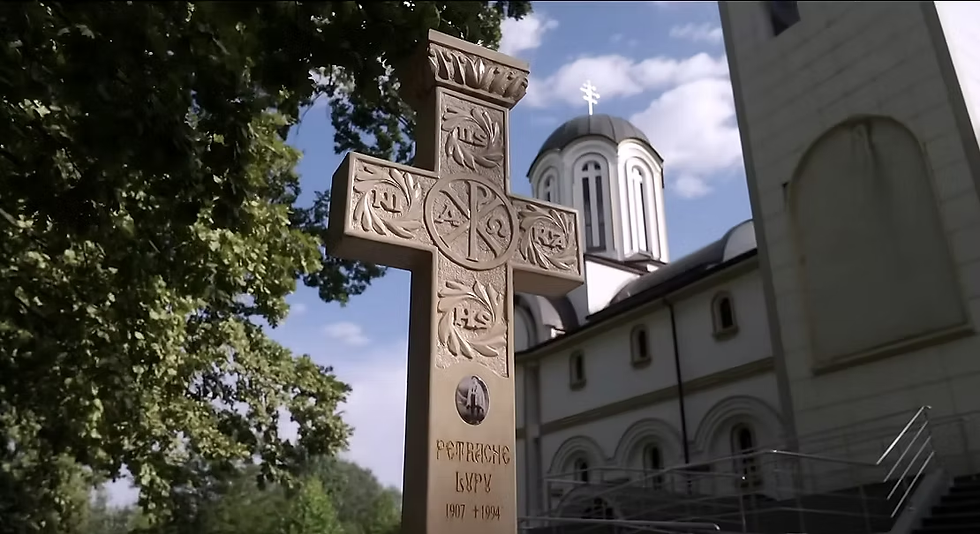
Yet something remained: a fissure in reality, a question that continues to smolder in collective memory. Was Maglavit a true revelation, a projection of a nation in turmoil, or merely the echo of an ancestral need for the sacred? The answer may never be fully known. But perhaps the truth lies not in what Petre saw, but in the way an entire country felt, for a brief moment, that heaven could descend to earth. Otherwise, the plain remains silent. And its silence speaks more than any testimony.


Comments