
CASABLANCA, THE LOVE THAT WROTE HISTORY
Casablanca is a timeless masterpiece that transcends the boundaries of cinema, remaining an enduring emblem of the classic film. Released in 1942, this jewel of Hollywood’s Golden Age fuses romantic drama with historical tension, delivering a deeply moving and unforgettable experience under the inspired direction of Michael Curtiz.

The film offers a rare synergy of story, atmosphere, and legendary performances, often hailed as the greatest love story in the history of cinema. It does not follow the patterns of conventional happiness; instead, it delves into the profound depths of difficult choices and the nobility of letting go, turning sacrifice into the ultimate act of love.
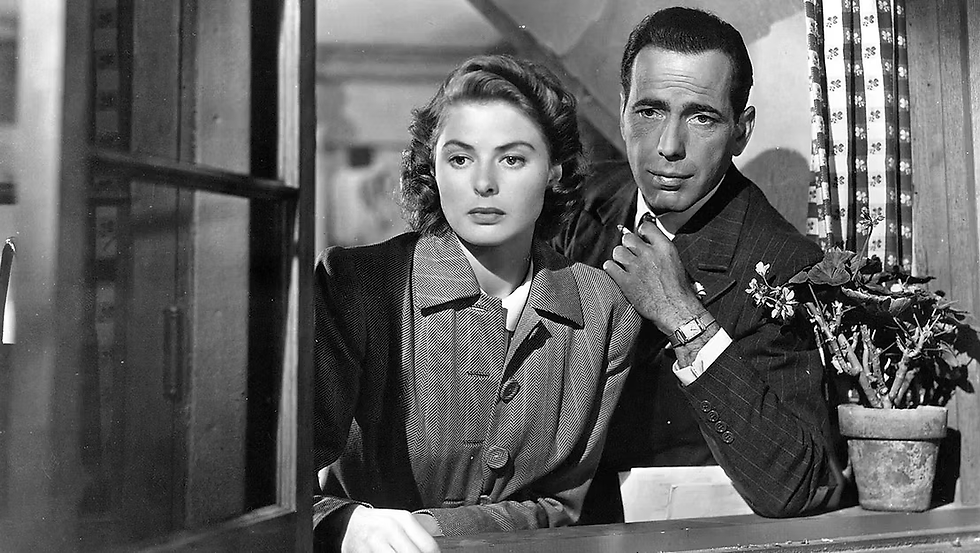
The cast is remarkable: Humphrey Bogart embodies the cynical yet enigmatic Rick Blaine, while Ingrid Bergman, with her grace and quiet melancholy, breathes life into Ilsa Lund. Their on-screen chemistry has become iconic, and lines such as “Here’s looking at you, kid” are etched forever into the fabric of global culture.

Ingrid Bergman — Sweden’s most celebrated actress — captivates not only with her classic beauty but also with the artistry that earned her three Academy Awards, two Emmys, a BAFTA, and four Golden Globes. A polyglot and a consummate performer, she conquered audiences in five languages, standing alongside legends such as Katharine Hepburn — the only actress to surpass her in Oscar wins. Bergman remains a symbol of grace and acting power, able to convey vulnerability, strength, and magnetic presence with disarming naturalness.
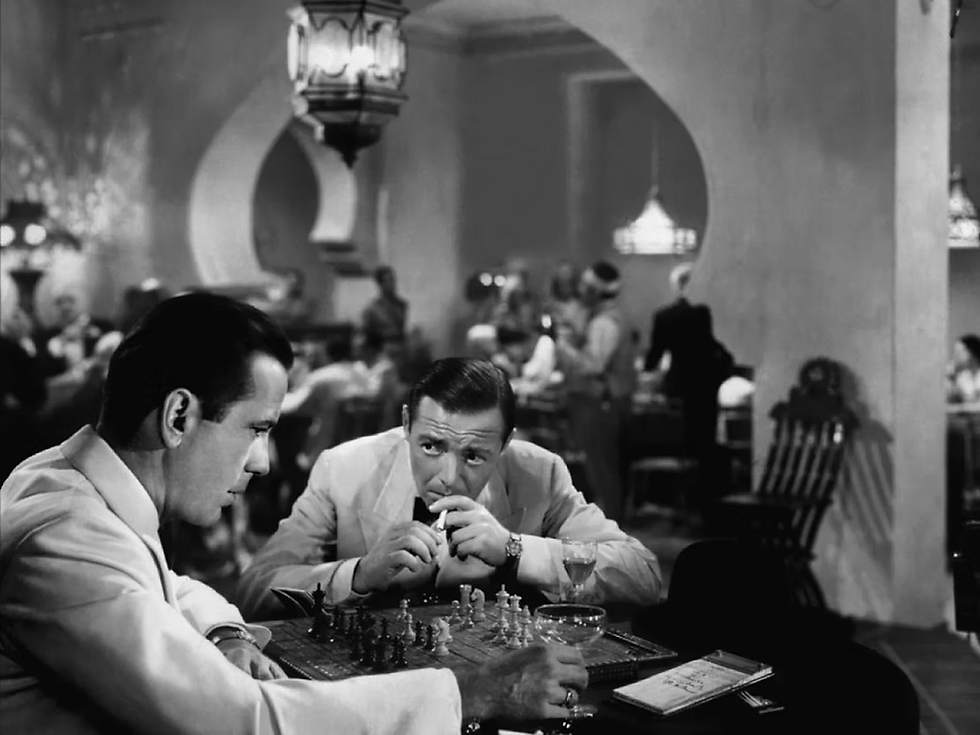
Humphrey Bogart, a pillar of Hollywood’s Golden Age, became through this role a defining American cultural icon. In 1999, the American Film Institute named him the greatest male star of classic American cinema, with Rick Blaine ranked among the screen’s most memorable heroes.

But what truly makes Casablanca special? More than a film, it is a reflection on lost love, political ideals, and the weight of choices in a world teetering on the brink. The smoky atmosphere of Rick’s Café, the haunting melody of As Time Goes By, and the unforgettable dialogue weave a cinematic poetry whose charm remains undimmed after more than eight decades.

The story places Rick Blaine in the heart of a French-controlled city, a refuge for those caught in the turbulence of war. Withdrawn and disillusioned, Rick tries to stay neutral — until fate brings him face to face with Ilsa Lund, the woman who once broke his heart, now alongside Victor Laszlo, the courageous Czech resistance leader hunted by the Nazis. Rick holds the “letters of transit” that could save them both, but his decision becomes an inner battle between self-interest and self-sacrifice. Under the shadow of Nazi power, Rick emerges as a symbol of courage, idealism, and a love that transcends passion — one that expresses itself in noble deeds.

Famous lines such as “We’ll always have Paris” and Sam’s poignant piano refrain intensify a story that resonates in every frame. Casablanca itself becomes a living character — full of intrigue, danger, and moral dilemmas. Curtiz’s masterful direction, with its play of light and shadow, heightens the tension and deepens the emotion, creating a cinematic world that surpasses both time and place.

Casablanca is not merely a love story — it is a meditation on moral choice, on sacrifice in the name of freedom, and on the human spirit tested by adversity. That is why it remains a cherished and admired masterpiece: an eternal lesson in courage, hope, and true love, speaking with power and tenderness to generations of film lovers. This is, in every sense, an invitation to step into the universe of an extraordinary film — one that will take root in your heart and remain there long after the lights go down.


Comments