
THE WATERFALLS OF SANCY
Two waterfalls. Beautiful, magnificent, impressive. Two names, each telling a different story. “Rossignol”—“The Nightingale”: its waters become a stream as they flow downhill, producing a gentle sound, a whisper which, according to the locals, resembles the song of a nightingale. Hence, they say, the name of the waterfall. Less poetic—or perhaps simply lacking a musical ear—we would say that its name is inspired by the birdsong echoing through the forest that surrounds it. Series: The Magnificent Waterfalls of France.

The other is La Grande Cascade, situated at the very end of the magnificent ridge of Puy de Sancy, which terminates here, at the edge of the waterfall. Or rather, it terminates with water cascading from a height of more than 30 metres, making it one of the highest waterfalls in the Massif Central. Fully exposed to the open air, without trees surrounding it, it appears all the more majestic and impressive.

Both waterfalls could have fascinated visitors wherever they happened to be. Nature, however, chose one of the most spectacular of France’s Puys—the volcanic mountains of central and southern France—as their home: Puy de Sancy. After crossing it on foot in the summer of 2021, we nicknamed it “The Great Volcano” (a story recounted in Puy de Sancy – The Great Volcano).

Put simply, Puy de Sancy is a veritable gold mine for the eyes of hikers, while its waterfalls are genuine treasures, certain to delight visitors. Geographers and the official website, www.sancy.com, count no fewer than fifteen waterfalls in the surrounding area. Some bear particularly evocative names: Saut du Loup—“The Wolf’s Leap” (above, left), Bois de Chaux—“Limewood Forest” (above, right), and Biche—“The Doe” (below).

Two Waterfalls for the Price of One!
Our wonderful team, consisting of my wife Irina and our two children, Radu, the elder, and Vlad, the younger, had come to climb the summit of Puy de Sancy and walk along its ridge. But such an undertaking cannot simply be launched without preparation; a proper warm-up is required. So, on the second day of our holiday, we set off towards Rossignol Waterfall: approximately 3 kilometres, with a positive elevation gain of 200 metres. Training—with a waterfall thrown in as a bonus.
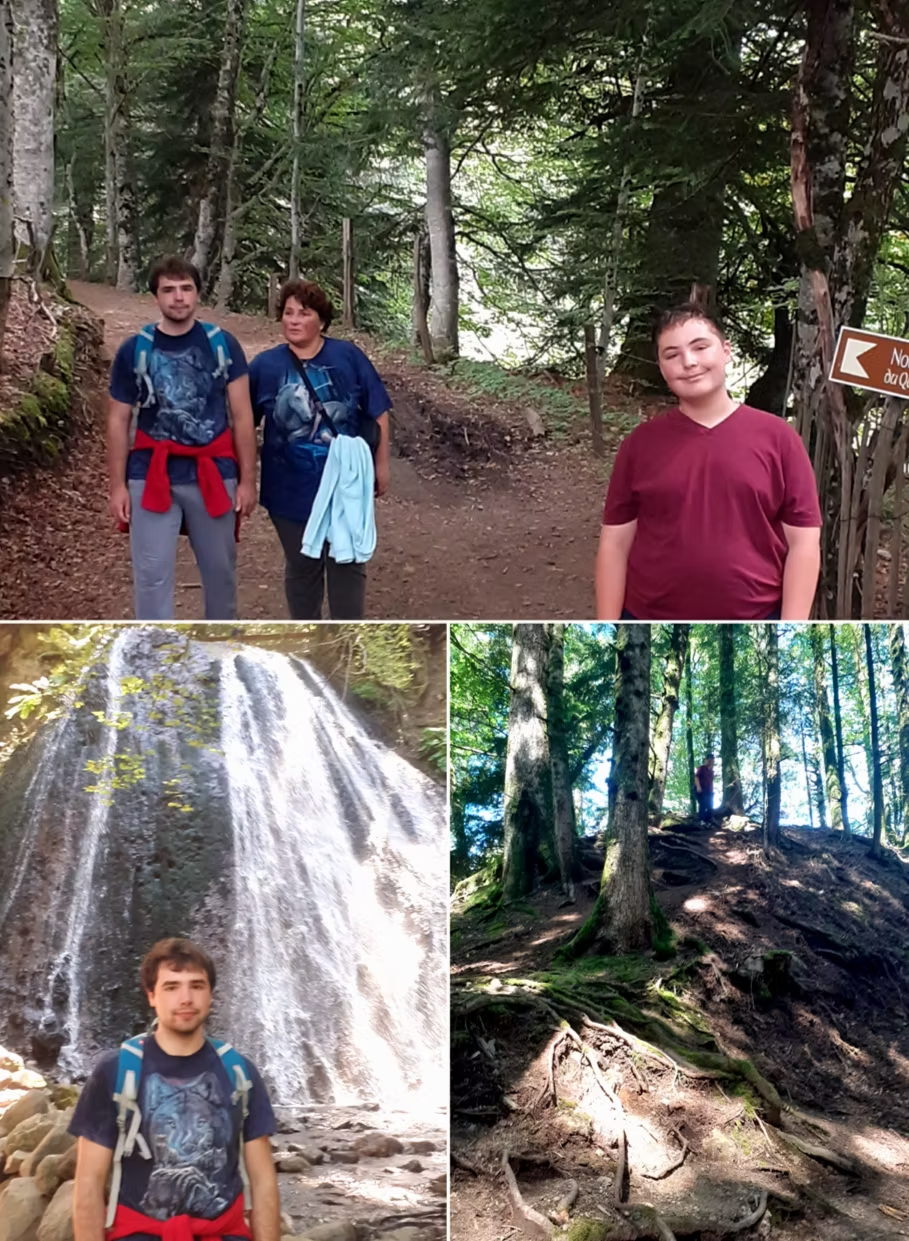
Our starting point was the car park by the Paysager cemetery. The trail led us through a magnificent forest, and we walked along listening with great pleasure to the birdsong. The path was mostly dirt, with stones scattered here and there. In some sections, the ascent became somewhat steeper, putting our leg muscles to work. The ground can be slippery, particularly when wet, so care is required to avoid a fall; a dislocation or sprain is the last thing we would want.

A clearing—and an unexpected encounter: several black-and-white llamas that appeared perfectly at home here. It seemed that the environment suited them just as well as their native habitat. Most likely, they were there for their beauty and exotic appearance rather than for commercial purposes. Whatever the reason, seeing them was certainly a delightful surprise.

Especially since the trail then led us to a departmental road, alongside which we walked for several hundred metres before the path returned to the forest. Naturally, we would have preferred not to encounter the road. At times, the noise of passing cars mingled with the sound of the waterfall, which we could already glimpse in the distance, partially concealed by the trees.

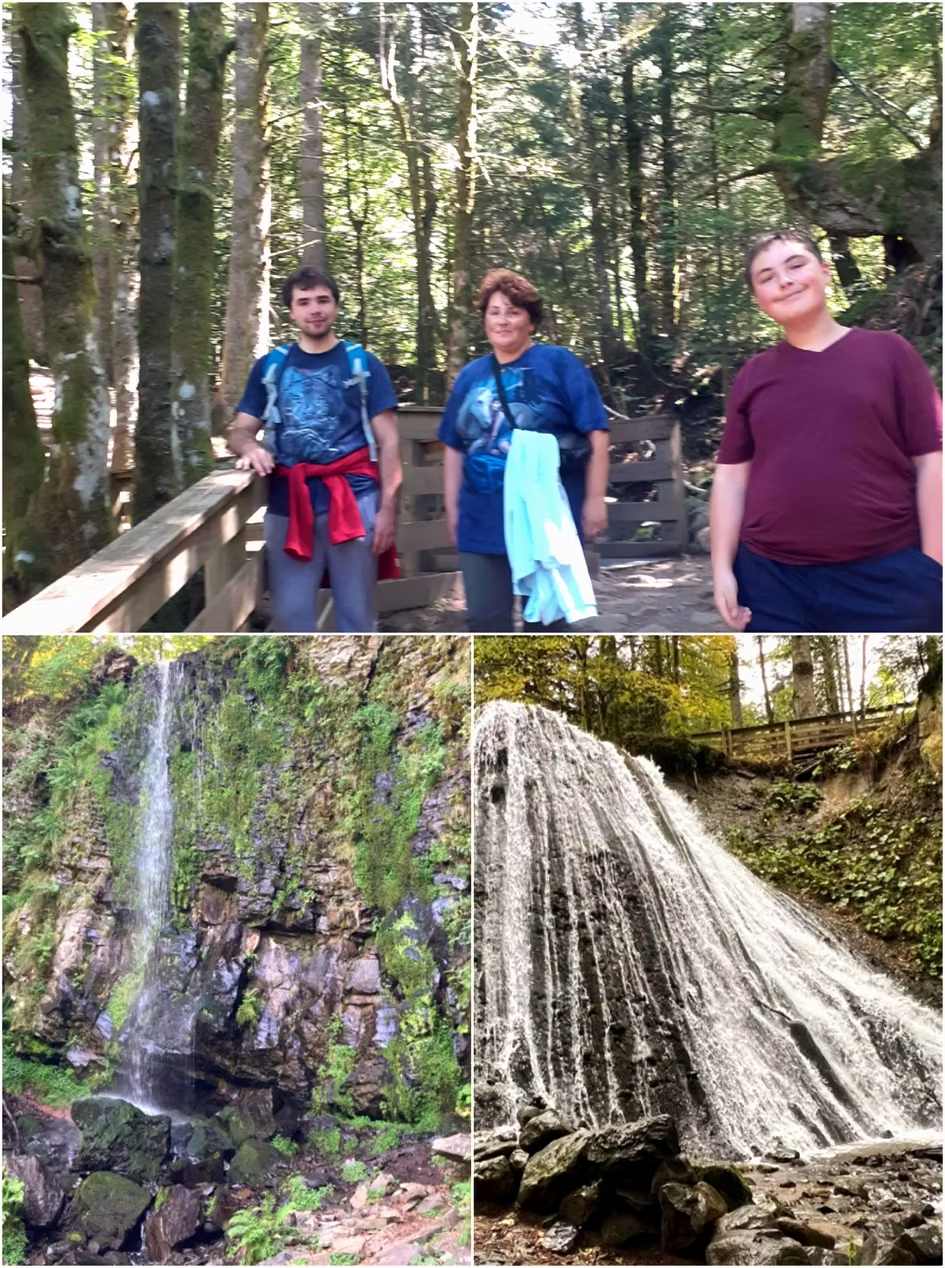
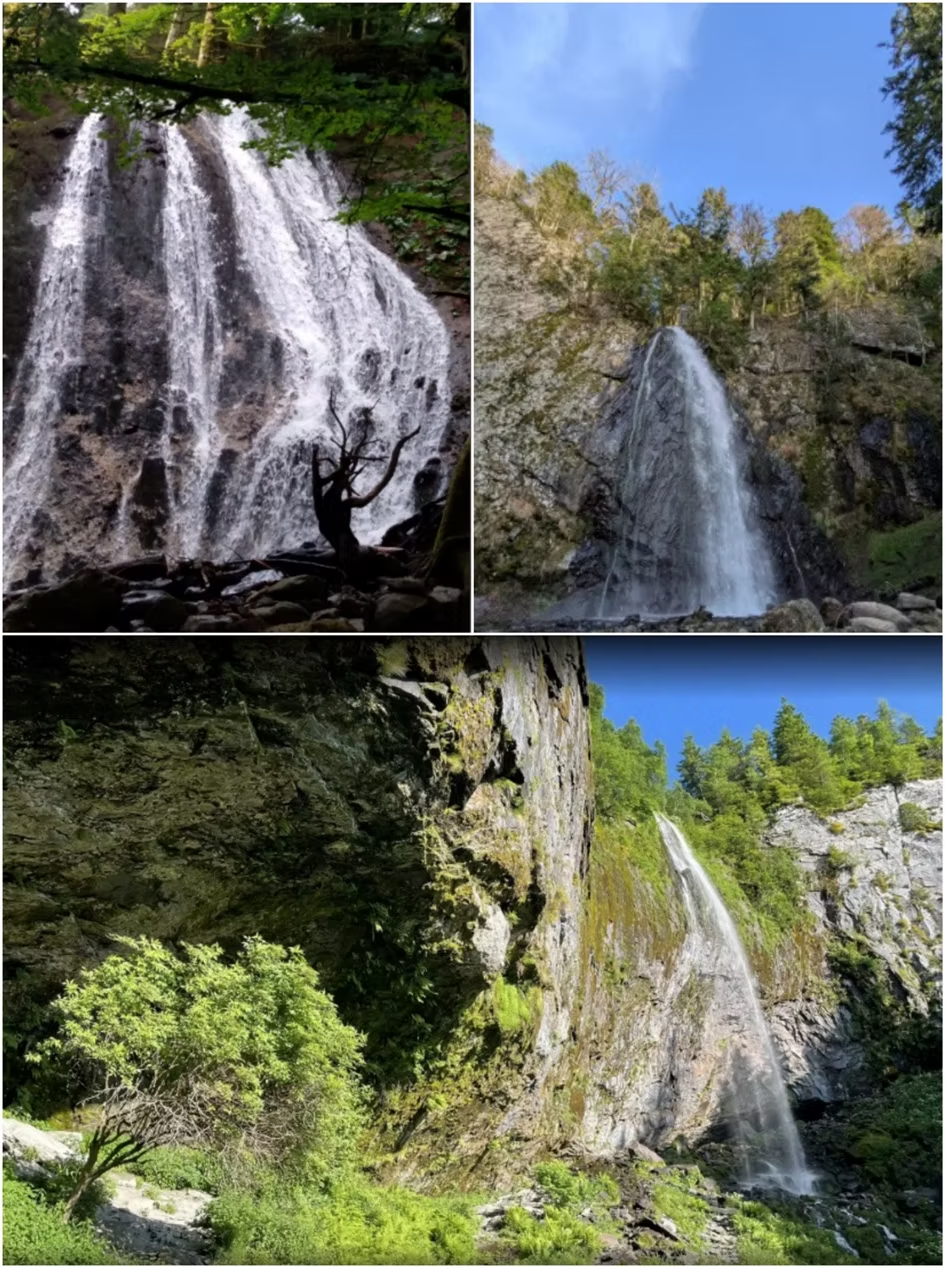
And finally, we arrived—there she was, before us. “The Nightingale” is rather small compared with her sisters in the surrounding area: just 7 metres high, carved into soft, friable limestone rounded by the water cascading from above. Majestic, she made us think of a bride’s veil, although Vlad thought she looked more like water spraying from a garden sprinkler. Beautiful and seemingly quite harmless, she made us laugh for another reason: the stream into which she pours her waters is called the Hell Stream. Radu, meanwhile, had to submit to the inevitable “Daddy’s photo session”!

On our way back, we spotted signposts indicating the existence of a second waterfall, Queureuilh. A name that sounds as though it might belong to some South American tribe—an echo, perhaps, of the llamas we had encountered earlier. Later, we discovered that the name actually comes from the local dialect of the Occitan language and means “squirrel”!
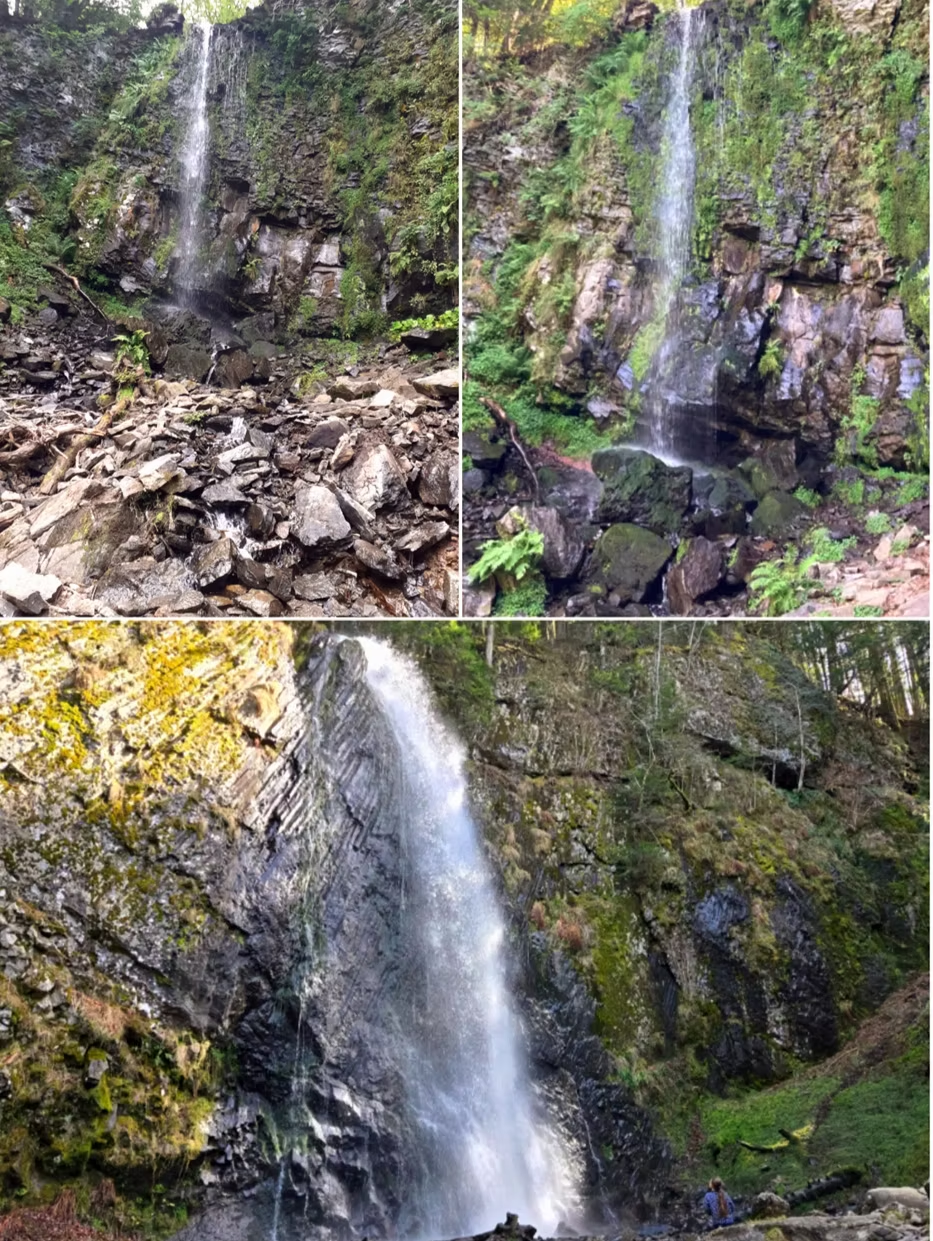
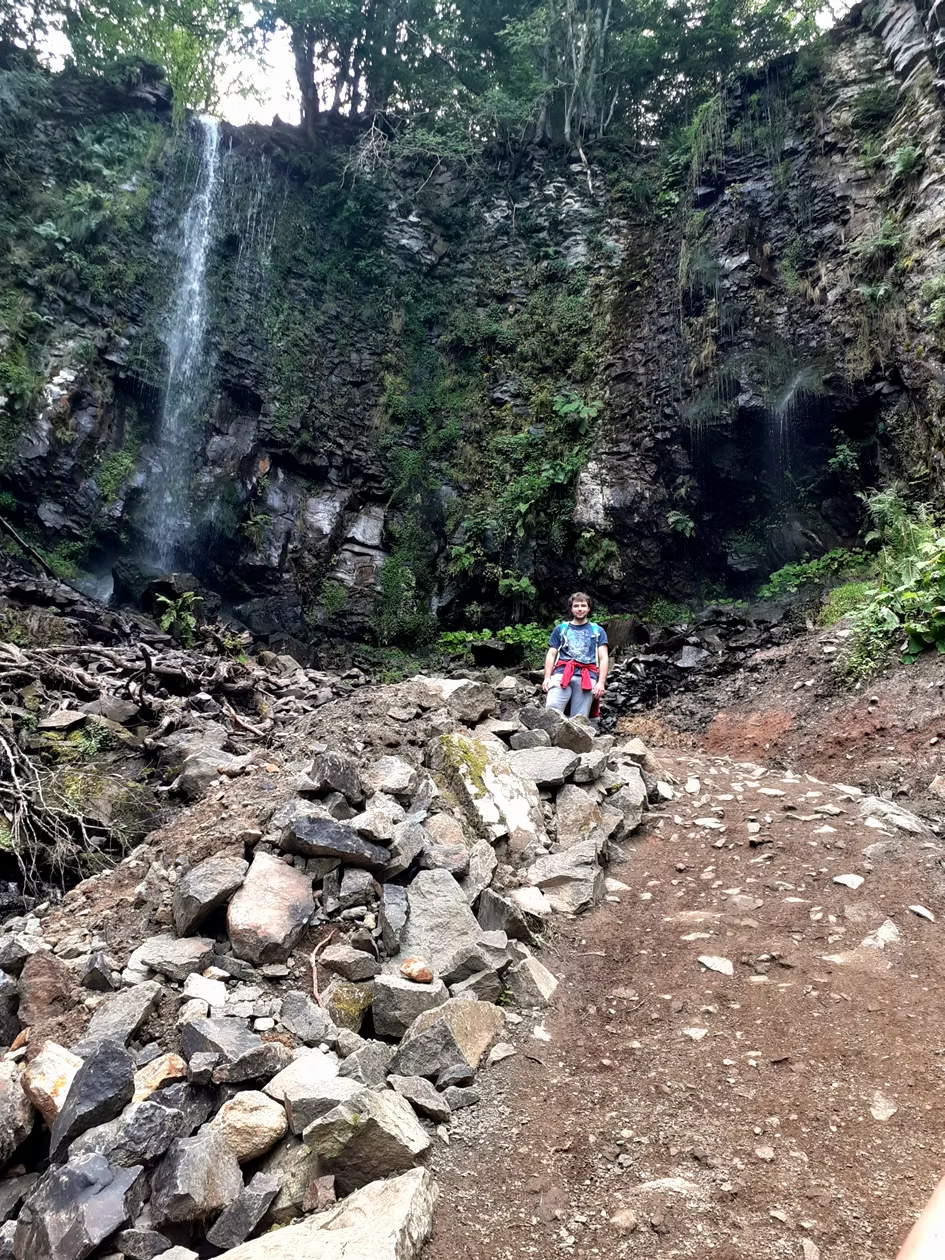
It is even more impressive than “The Nightingale”: 20 metres high, with hard basalt rocks that force the water to yield to their resistance. The stone cannot easily be shaped by the falling water, so the cascade is forced to plunge almost vertically. And once again, Radu had to submit to the “photo session”!
On the way back, we wandered leisurely through the forest, our eyes feasting on the beauty of the surrounding natural landscape. It was so pleasant that we did not head straight for the car. Instead, we made several little detours: we climbed a small hill and scrambled over a few rocks. We were even fortunate enough to encounter something rather special: the Hell Stream, fed by the waters of the two waterfalls.

With the memory of these wonders firmly etched in our minds and hearts, we eventually arrived back at the car park. Our spirits were soaring, and broad smiles spread across our faces. We laughed even more as we told ourselves that we had been particularly fortunate that day: we had been able to admire two waterfalls, “The Nightingale” and “The Squirrel”, for the price of one. That is, for the price of a single hike!
La Grande Cascade and Its Access Trails
Ideally situated at the end of the ridge of the Sancy massif, La Grande Cascade can be reached by not one, but two different trails. The first, and the shorter of the two, begins in the town of Mont-Dore. It is approximately 2 kilometres long, with a positive elevation gain of 300 metres. The route is well marked by directional arrows placed throughout the forest that precedes the waterfall. The trail consists largely of dirt, with wooden steps installed in certain sections to facilitate the ascent and reduce the risk of slipping when the ground is wet.
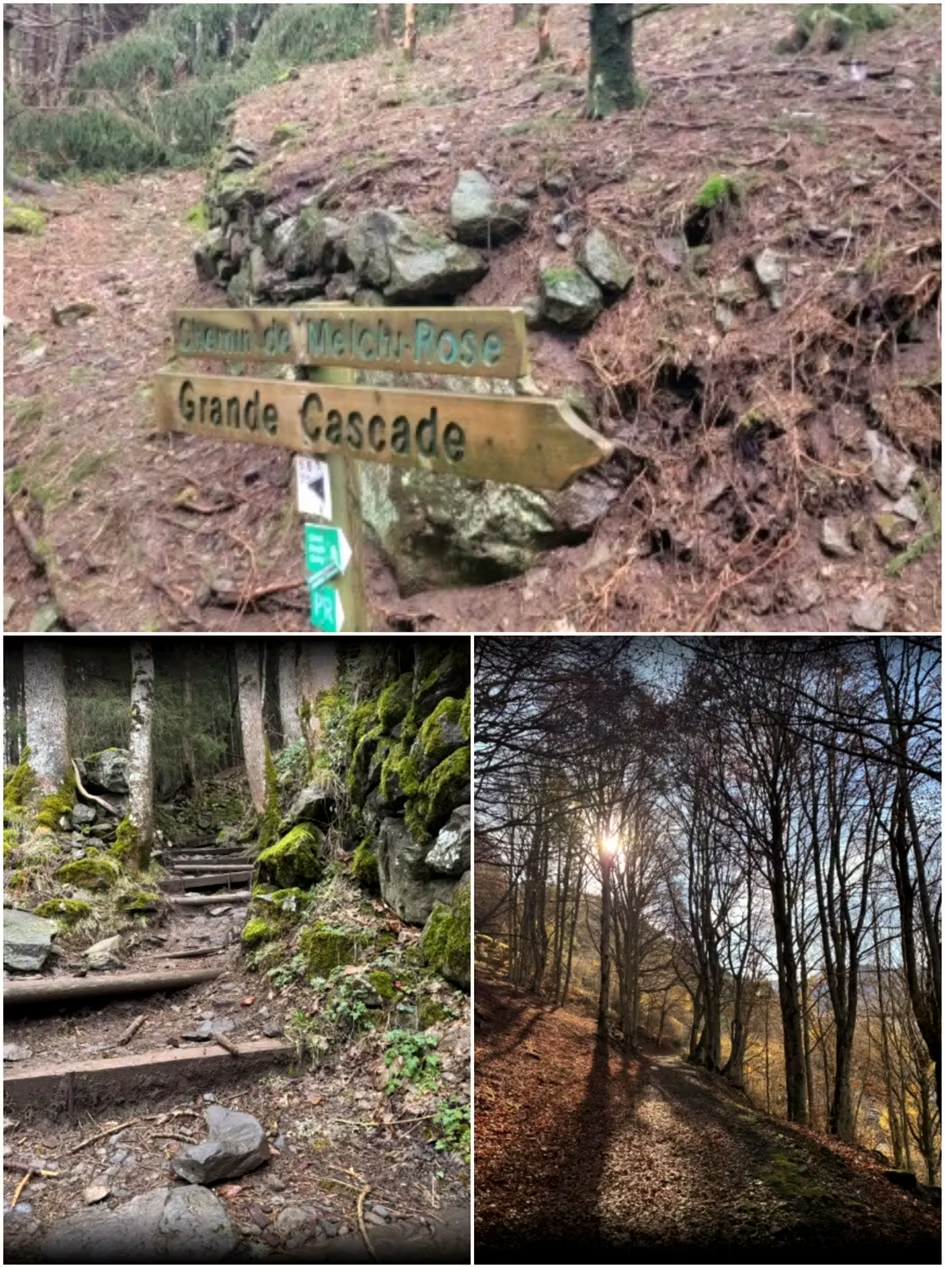
We walked this trail in the opposite direction, beginning at La Grande Cascade, lulled by the sound of its waters, which gradually faded as we moved farther away. The descent was easy, so relaxed did we feel after spending time in its presence. Better than a meditation session. Magnificent waterfall—the image of it will remain forever engraved within us.

We had reached it after a long hike that had begun much earlier in the day, following the other access route, the one that crosses the ridge of the massif. It begins with a staircase of 884 steps leading from the upper cable-car station to the summit of Sancy, at 1,884 metres. From there begins the ridge trail, which we would follow in its entirety before finally reaching the waterfall.

One particular highlight was the summit of Roc de Cuzeau, at an altitude of 1,737 metres, which Vlad and Radu climbed with great enthusiasm, delighted by the opportunity to scramble over the rocks.

This is the longest and most demanding of all the trails in Sancy. At the same time, it offers magnificent views not only of the mountain itself but also of the town at its foot.
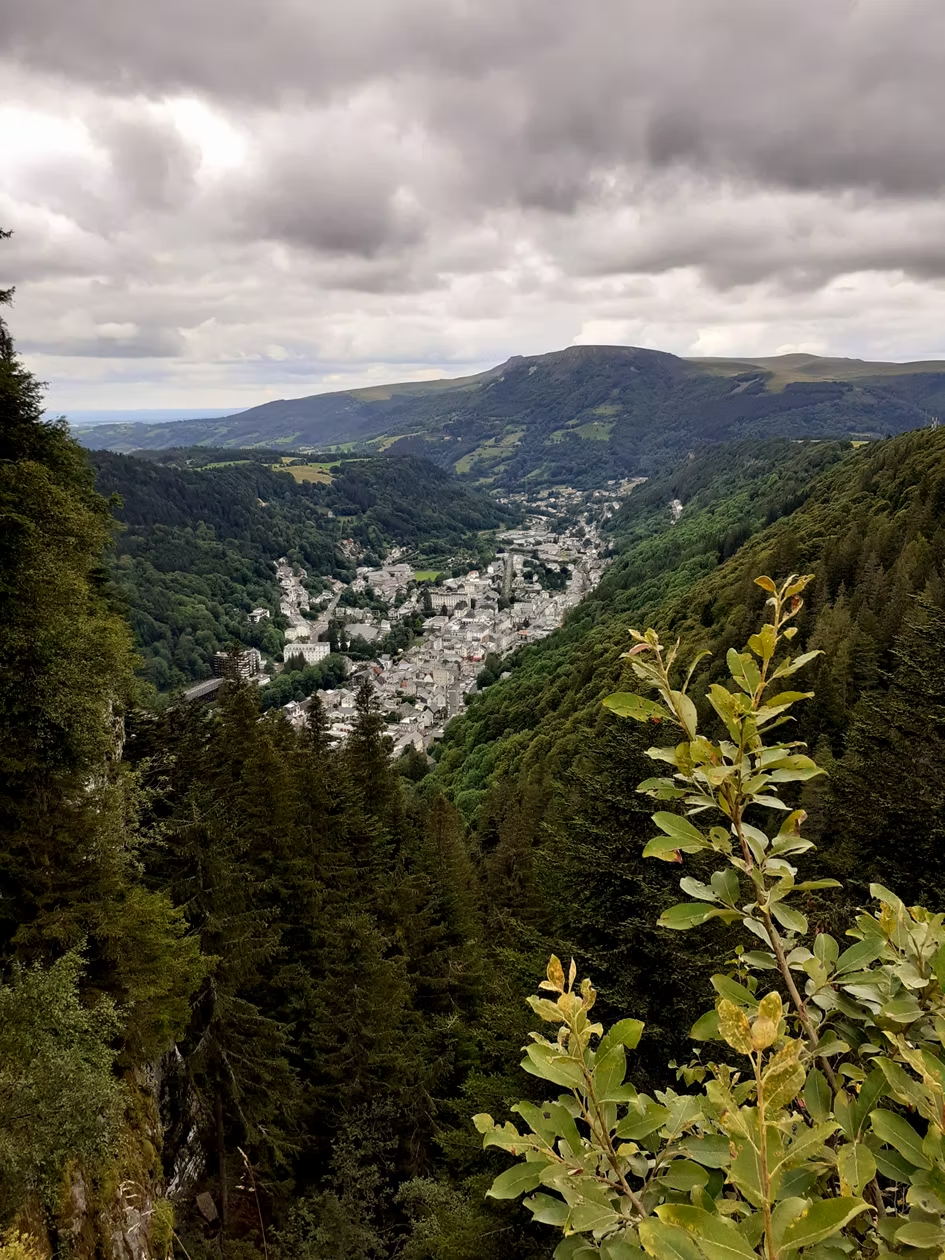
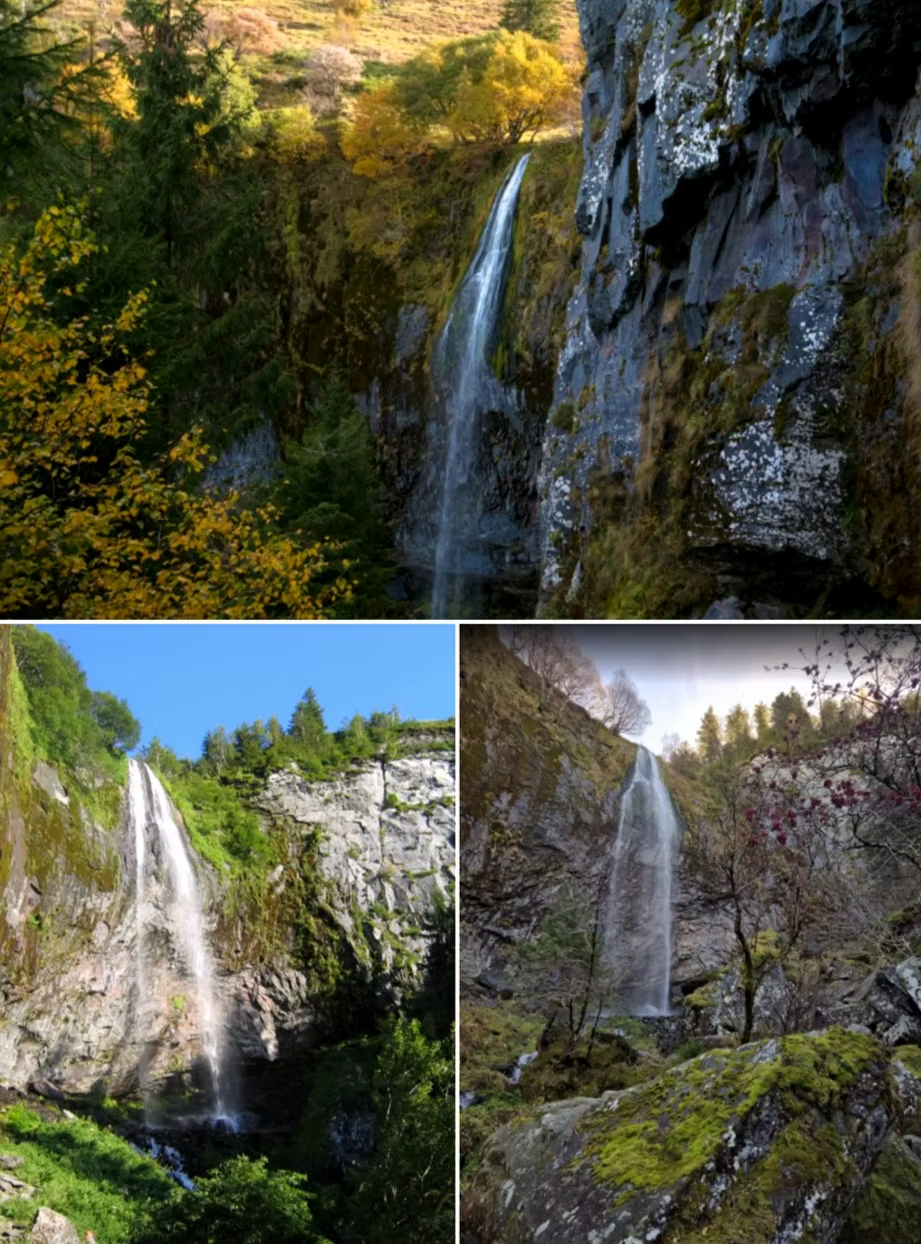
Descending from Roc de Cuzeau, we gradually drew closer to La Grande Cascade. We first caught sight of it from a distance: a small ribbon of falling water surrounded by vegetation. As we approached, we discovered a viewpoint protected by a railing, from which hikers can admire the waterfall. Continuing along the trail, we finally reached her, La Grande Cascade. Face to face, our eyes met the eyes of the water.

For us, meeting her had the taste of success, the savour of victory. The ridge trail had been long, at times difficult and physically exhausting. But the reward was now here, directly before our eyes. A true wonder of nature.
When approaching from the town, the closer one gets to the waterfall, the less earthy and the more rocky the path becomes. It is a sign that one is entering the mountain. Or leaving it, as was the case with our hike. Whether it marks an entrance or an exit, the gateway is there: La Grande Cascade.

As we prepared to leave, we regretted that we had not been able to see the other waterfalls as well. We consoled ourselves with the thought that there would be other opportunities to return to Sancy, to hike through its mountains and discover more of its waterfalls. The memory of the three we had encountered—Rossignol and Queureuilh, and La Grande Cascade (below)—seemed almost to demand that we return.


Comments