
VLAD AND HIS ALPINE BAPTISM
Although we have lived in France for over ten years, my younger son Vlad and I first truly discovered the magnificence of the Alps during the summer of 2023, while on vacation in Saint-Colomban-des-Villards, at the foot of the Belledonne massif. It was the perfect occasion for Vlad to experience mountain hiking and to fall in love with the mountains—their rocks, lakes, and alpine pastures. Below is the story of his first trek and how he became a devoted mountaineer.

Saint-Colomban-des-Villards
The village lies roughly midway between exit 26, “Vallée des Villards,” on the A43 motorway and the Col du Glandon, a route highly regarded by cyclists. Situated at 1,100 meters above sea level and about twenty minutes’ drive from the motorway, it is surrounded by peaks such as Grand Truc (2,209 m) and Frumezan (2,261 m). In winter, the village serves as one of the gateways to the Les Sybelles ski domain.

During the winter season, a variety of snow sports can be practiced on slopes suitable for all levels. In summer, the village offers numerous hiking trails that pass by alpine pastures, shepherd huts, forests, mountain lakes, and peaks. Saint-Colomban-des-Villards is composed of several hamlets, whose tightly clustered houses retain their traditional charm.

At the same time, the village has developed quality tourist infrastructure, attracting visitors throughout the year. During our stay at a local guesthouse, Vlad described the daily view from our window as “postcard-perfect.”

We wasted no time; once settled, we set out to explore. Vlad was eager to test his brand-new hiking boots, and we also wanted to familiarize ourselves with the village. The crisp mountain air quickly made us hungry, a need satisfied with local charcuterie, which Vlad declared “the best food ever.” From that moment, we decided that all our picnic lunches during the hikes would feature these local delicacies.

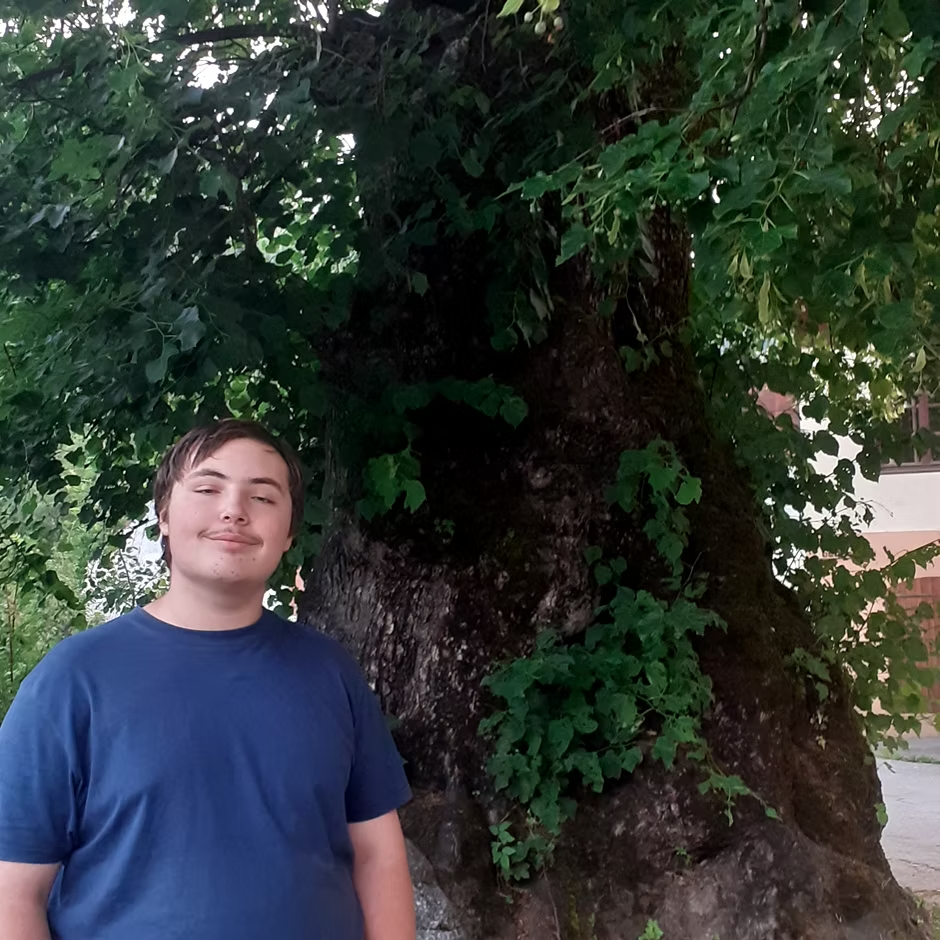
We wandered to the village church, the central element of every French settlement, where we found a remarkable lime tree (Tilleul), centuries old. A plaque noted that it had been planted during the reign of Henry IV (1589–1610), survived an avalanche in 1981 that destroyed the house behind it, and was designated an Arbre remarquable de France in 2013—the only one in Savoie, according to locals.
That evening, we returned to our guesthouse for a well-deserved rest, for the following day marked Vlad’s “Alpine baptism”: the Balmette trail.
The Balmette Trail
The hike begins from the “Frumezan forest road,” behind the church. Though paved, the road is narrow and uneven, allowing only one vehicle to pass at a time. After 7.5 km and fourteen switchbacks, we reached the Frumezan Hut (1,840 m), where we parked. From here, the trail is clearly marked, and the well-trodden path is easy to follow.

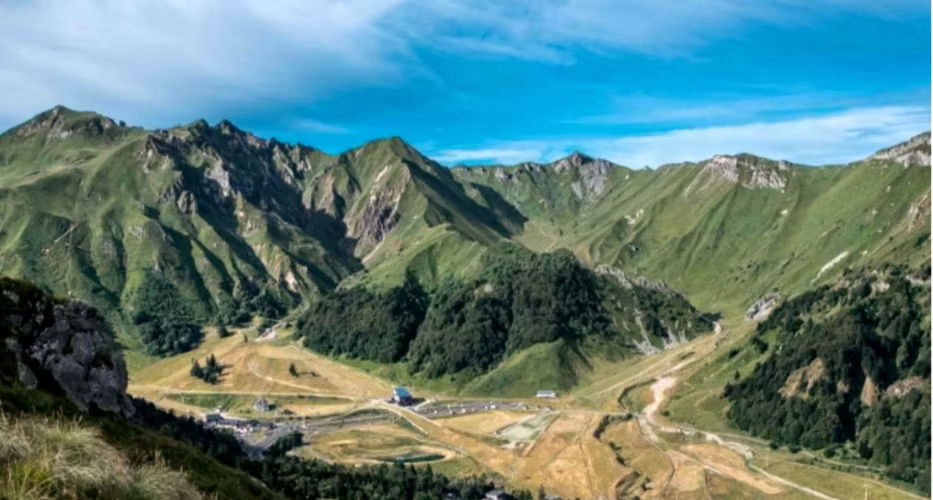
The initial ascent is gentle, allowing us to adjust to the effort and admire the Vallée des Villards from above—a section known as the “Balcony of the Villards Valley.” This segment ends at the base of Frumezan peak, where Vlad submitted to the inevitable “vacation photo sessions with Dad.”

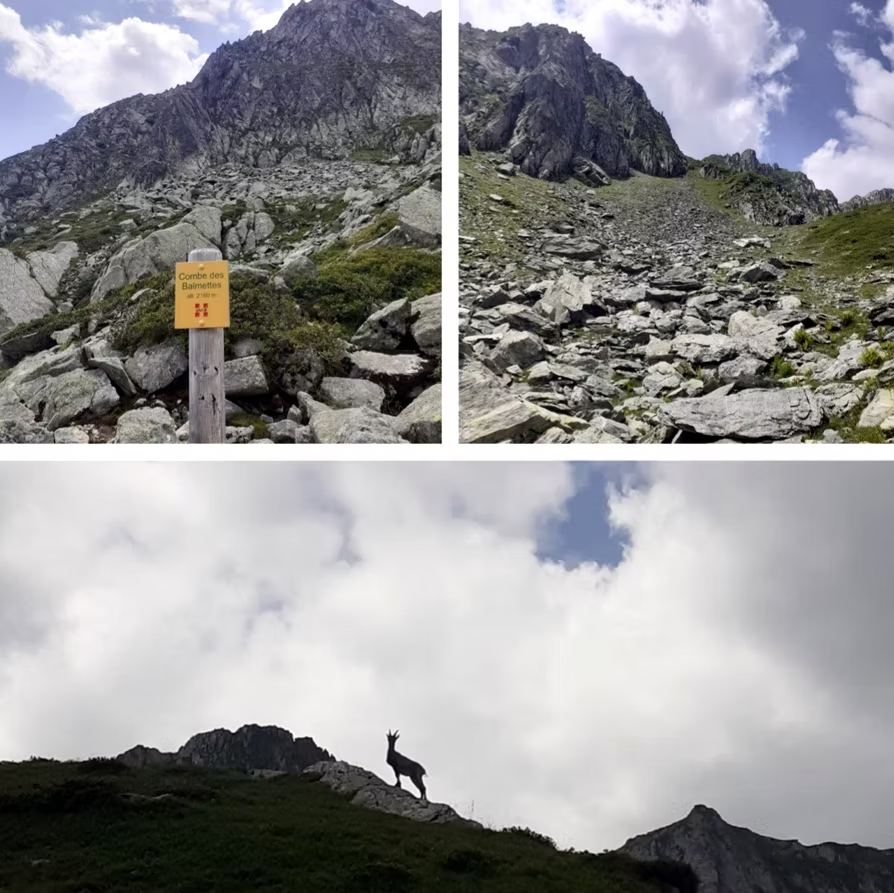
The most challenging section soon followed: the rockfall zone descending from Frumezan’s summit. The boulders, of varying shapes and sharp edges, rest precariously on a slope. A bypass exists to avoid this hazard, but Vlad refused, repeatedly traversing the rocky passage, clearly delighted.

A few hundred meters further, we entered the Balmette Depression, where the path remained stony. Though the rocks were smaller, stepping over them added to our enjoyment. The trail alternates between dirt and rocky sections, and we hiked much of it under the watchful eye of a sentry perched on a rock: a magnificent Alpine ibex (bouquetin), the local counterpart of Romania’s Carpathian black goat.
Suddenly, Lac Balmettes appeared at 2,190 m. Its colors enchanted us, but we pressed on toward Col Balmette at 2,460 m—the day’s ultimate goal. Vlad teased that he was available for a photo with the lake, and I promised a proper shoot once we reached the col. Along the way, he spotted a patch of white at a cliff base—snow in late July! Observing it up close only deepened his wonder and delight.
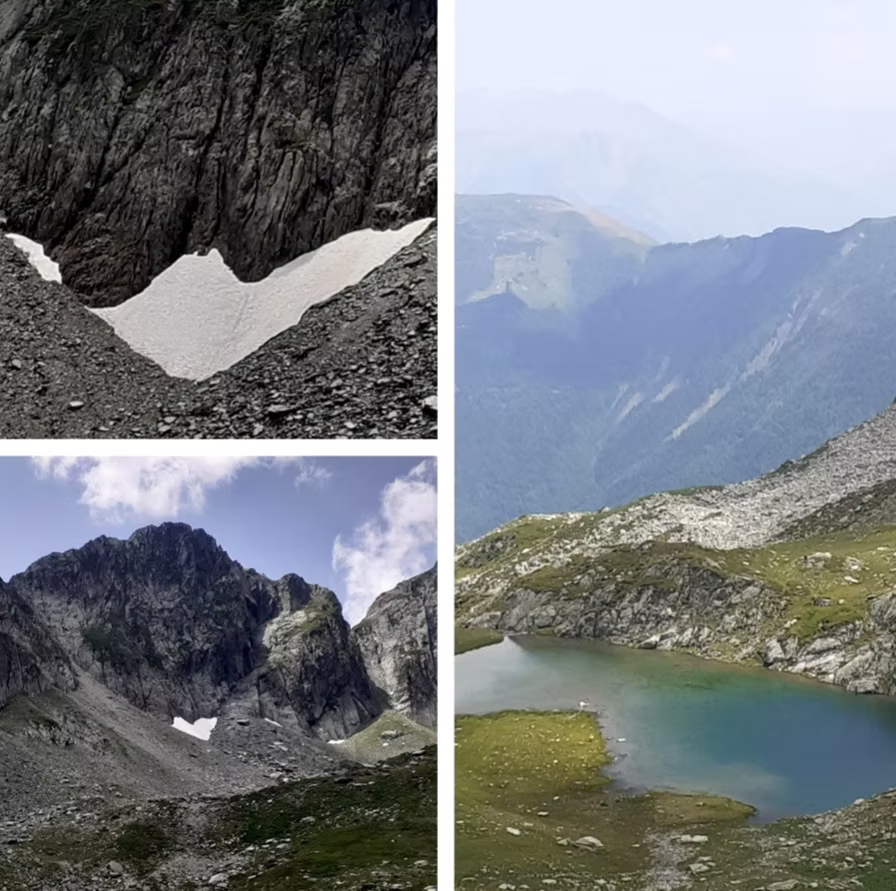
At the pass, the landscape was breathtaking. Vlad perched on a wide, flat rock and gazed at the surrounding peaks. The fatigue from the steep ascent vanished entirely, and the vistas were etched permanently in his memory. Though he did not say it outright, it was evident that his love for the mountains had become enduring.

We lingered for over an hour before descending, moving slowly to spot the ibex we had seen on the ascent. They appeared intermittently, drinking, feeding, or strolling, keeping their distance. The pastures and lakes belonged to them; we were respectful visitors.

Along the way, we also noted wooden and metal structures designed to protect the valley from avalanches, guiding snow and debris safely away from homes.

Vlad navigated the scree one last time with care, demonstrating the lesson he had learned: the mountain is a friend, provided one approaches with respect and attention—watching where and how to step, supporting oneself, and moving deliberately. Disrespect invites consequence.

By the time we returned to the car, rain had begun to fall, clouds enveloping Frumezan peak, a dramatic close to a perfect day.

Epilogue
Two years later, I mentioned to Vlad that I intended to write the story of his first Alpine hike. He reminded me to include the lakes, the ibex, and the views from the high pass. While he has forgotten the names of the peaks, the images remain forever imprinted on his heart and mind.


Comments